
Drip Lines
IrriSmart offer 2 bespoke dripline solutions, The spacings and flow rates have been developed over may years in French vineyards although we can create bespoke to suit any location, climate, environment, planting or soil type.
-
UniWine AS – this system is designed for new vineyard and is installed below the surface, this reduces damage from insects and animals, also transpiration, and humidity therefore reducing disease risk.
-
UniWine RC – is specifically designed for established vineyards and can be laid on the ground or clipped to wire support to keep it away from damage.
-
Both system give 100% uniform aplication from the first emitter to the last. And with proper system design will give 100% uniform aplication of water and nutrients across the whole vineyard.
-


Irrigation Water Treatment
Water quality plays a crucial role in the success of your farm, greenhouse, nursery, garden, or sports fields. Poor water quality can negatively affect your equipment, irrigation systems, soil health, and ultimately, plant quality and yield.
By understanding your water supply, you can effectively treat it to enhance plant health, improve irrigation performance, and optimize water and uptake.
As water becomes increasingly scarce, especially during peak seasons, our innovative water treatment solutions can help you harness the potential of your resources, including the use of saline water and recycling drained water.


Water treatment in irrigation is never a one‑size‑fits‑all solution. The right approach depends entirely on the issue you’re trying to resolve—whether it’s pathogens affecting soft fruit, biofilm and mineral build‑up in horticultural systems, or sediment and water quality challenges common in agriculture. Most effective irrigation setups use multi‑level treatment, combining physical, chemical, and biological processes to achieve reliable, season‑long results.
Explore the water treatment options available and discover how our solutions help keep your water safe, your irrigation systems clean, and your crops—whether horticulture, agriculture, or soft fruit—healthy and performing at their best.
Water treatment options

Particle treatment
Filtration
Irrigation systems—especially micro‑irrigation such as drip lines and micro‑sprinklers—depend on effective filtration to protect emitters and maintain uniform water distribution. Filtering particles down to 130/100 micron is essential, as blocked emitters lead to uneven irrigation, reduced crop performance, and long‑term system damage.
Filtration is the physical removal of particles from water. Sediment, organic matter, and debris can block or wear irrigation components, so removing these particles is critical for protecting your system and ensuring reliable operation. Common filtration methods include screen filtration, disk filtration, sand filtration, and sand separation.
The correct filtration method—or combination of methods—depends on the type of particles present and the irrigation system being used. While some filters can handle organic matter, filtration is generally recommended for particle removal only, forming the first essential step in a multi‑level water treatment strategy.
Although some filtration methods are better at handling organic matter it is usually recommended only for particle removal.

Water Treatment
Chemical Treatment
Chemical applications are essential when treating irrigation systems with high levels of organic matter, algae, pathogens, and biofilm. While some contaminants can be reduced before entering the system, most are already present within the pipework, tanks, or emitters — and in these cases, chemical treatment is almost always the only effective option.
Maintaining the correct dosage is crucial. Too little chemical will fail to control pathogens or break down biofilm, while overdosing can damage irrigation components, harm plants, and disrupt nutrient uptake. Many treatment chemicals offer plant‑health benefits at the correct concentrations, but prolonged or excessive exposure can be harmful to roots and sensitive crops.
Although IrriSmart does not supply treatment chemicals directly, we design and supply dosing and control systems built specifically for safe, accurate chemical injection. Each system is specified according to the chemical type, water flow rate, and required dosing level, ensuring reliable and consistent treatment.
Commonly recommended chemicals include acids, hydrogen peroxide, chlorine dioxide, chlorine, and hypochlorous acid, depending on the application and management strategy. Some treatments are safer and more crop‑friendly than others, which is why correct dosing equipment is essential.
Our dosing pumps are available in a range of flow rates and are built using carefully selected materials compatible with the chemical being injected. Combined with our advanced control options, we can deliver chemical dosing that is both safe and reliable across all irrigation systems and applications.
Stagnation and Algae treatment
Aeration
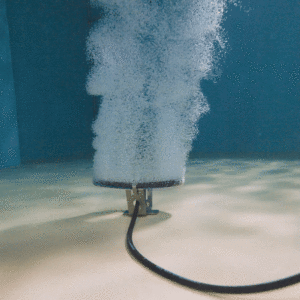
Oxygenated water improves overall water quality by increasing dissolved oxygen levels, helping to kill and inhibit algae and micro‑worms, and reducing the conditions that allow them to grow. Higher oxygen levels also promote stronger water and nutrient uptake by plants, supporting healthier root development and more efficient irrigation. The result is improved crop performance with significant savings in both water and fertiliser.
To keep irrigation water properly aerated or oxygenated, we offer three treatment options designed for both water storage tanks and larger lagoons or reservoirs. Each method increases dissolved oxygen, improves water quality, and helps prevent stagnation, algae growth, and micro‑organism development.
1. Diffused Aeration Systems (Tanks, Lagoons & Reservoirs)
For enclosed tanks or larger open water bodies, diffused aeration is the most effective method. Aeration diffusers are placed at the bottom of the water source and connected to an oxygen generator at the surface. The system pumps high levels of oxygen through a micro‑diffused plate, producing ultra‑fine micro‑bubbles with a very high oxygen transfer rate. This keeps water active, oxygen‑rich, and biologically stable.
2. Re-circulation Systems (Tanks & Enclosed Storage)
Re-circulation uses a pump to draw water from the bottom of the tank and return it at the surface, ensuring the water never becomes stagnant. We typically aim to move the full volume of water every 6–8 hours, maintaining oxygen levels and preventing anaerobic conditions. Recirculation becomes even more effective when combined with chemical treatment or pH‑stabilising systems, helping maintain consistent water quality.
3. Volcano Fountain Aerators (Reservoirs & Open Storage)
For open reservoirs, our floating Volcano Fountain Aerators continuously pump water from beneath the surface in large volumes, creating a ripple or volcano effect that prevents water from settling. This constant movement improves oxygen levels, reduces algae formation, and enhances overall water quality. With different nozzle options, these systems can also provide an attractive aesthetic feature while delivering functional aeration.

Disinfection & Pathogen Treatmnet
UV Treatment
Clean water is essential for cultivating healthy crops. UV‑C disinfection inactivates bacteria, viruses, and fungi — including pathogens such as Pythium and Fusarium — without leaving any residue in the water . This makes irrigation safer, more reliable, and more sustainable for growers.
Why UV‑C Is Critical for Crop Safety
In modern horticulture, harmful micro‑organisms thrive in closed irrigation circuits and move easily through water . During irrigation, water drains through the substrate and collects in a tank for reuse. This tank stores the drain water so that it can be reused.. Before this water is recirculated, it must be disinfected to prevent pathogens from attacking the crop .
UV‑C treatment inactivates micro‑organisms without chemical residues — a key advantage over chemical‑based disinfection methods . Consistent disinfection is essential for maintaining crop health, especially during warmer periods when pathogen growth increases rapidly in irrigation water. Especially in summer periods when the growth of pathogens in water is enhanced by warmer temperatures..
Some viruses and fungi can exist in high concentrations, requiring longer UV contact times, particularly in systems where nutrients are reused . Purpose‑built UV chambers ensure these organisms are permanently inactivated and can be easily integrated into irrigation systems. Special housings are used to permanently inactivate these micro-organisms, which are easy to install in an irrigation systems
Treating Intake Water
UV‑C is also highly effective for disinfecting rainwater and surface water used for irrigation . Stored water can accumulate micro‑organisms that threaten crop health, especially during long dry periods when water sits for extended time. This creates pollution in the water of microorganisms that can attack the crop.. UV‑C inactivates these pathogens, ensuring safe water for irrigation .
Beyond irrigation, UV‑C can support food safety by disinfecting water used for washing fruit and vegetables, helping combat bacteria such as Legionella and E. coli and extending shelf life.
UV‑C for Clean Results
UV‑C can disinfect more than just water — it can also be used for surface and air disinfection. Items such as crates and trays can be treated to prevent contamination , and UV‑C units placed in air systems can deactivate airborne fungi that spread through ventilation pathways. Placing a VGE Pro UV-C unit in the air installation deactivates fungi that spread through the air..
IrriSmart UV‑C Solutions
IrriSmart supplies a full range of UV‑C systems designed for horticulture, agriculture, and soft fruit production. Our INOX UV‑C units deliver:
-
Residue‑free disinfection
-
Effective inactivation of pathogens including Pythium, Fusarium, bacteria, viruses, and algae
-
Safe integration into recirculation systems, tanks, reservoirs, and intake water lines
-
High‑performance stainless‑steel chambers for maximum UV efficiency
-
Options for immersion, inline, and floating UV systems
Whether you’re treating drain water, intake water, or improving hygiene in your growing environment, IrriSmart UV‑C systems provide clean, safe, and reliable results.

HPNow's - HPGen
Onsite Generation of Hydrogen Peroxide
HPNow's HPGen® systems produce Peroxide UltraPure™ on demand — using only water, electricity and air. No chemicals to transport. No hazardous storage. Just clean, effective oxidation.
Traditional hydrogen peroxide is manufactured in large centralised plants, then transported in concentrated form — creating logistical cost, safety risk, and a significant carbon footprint.
HPNow's patented electrochemical process flips that model entirely. Our HPGen® systems generate low-concentration, high-purity Peroxide UltraPure™ on-site, continuously and autonomously, from nothing but electricity, air and water.
No chemical supply chain or hazardous deliveries
Breaks down to pure water and oxygen after use — fully circular
Autonomous operation with cloud monitoring
Proven across agriculture, industrial, data centers and municipal water